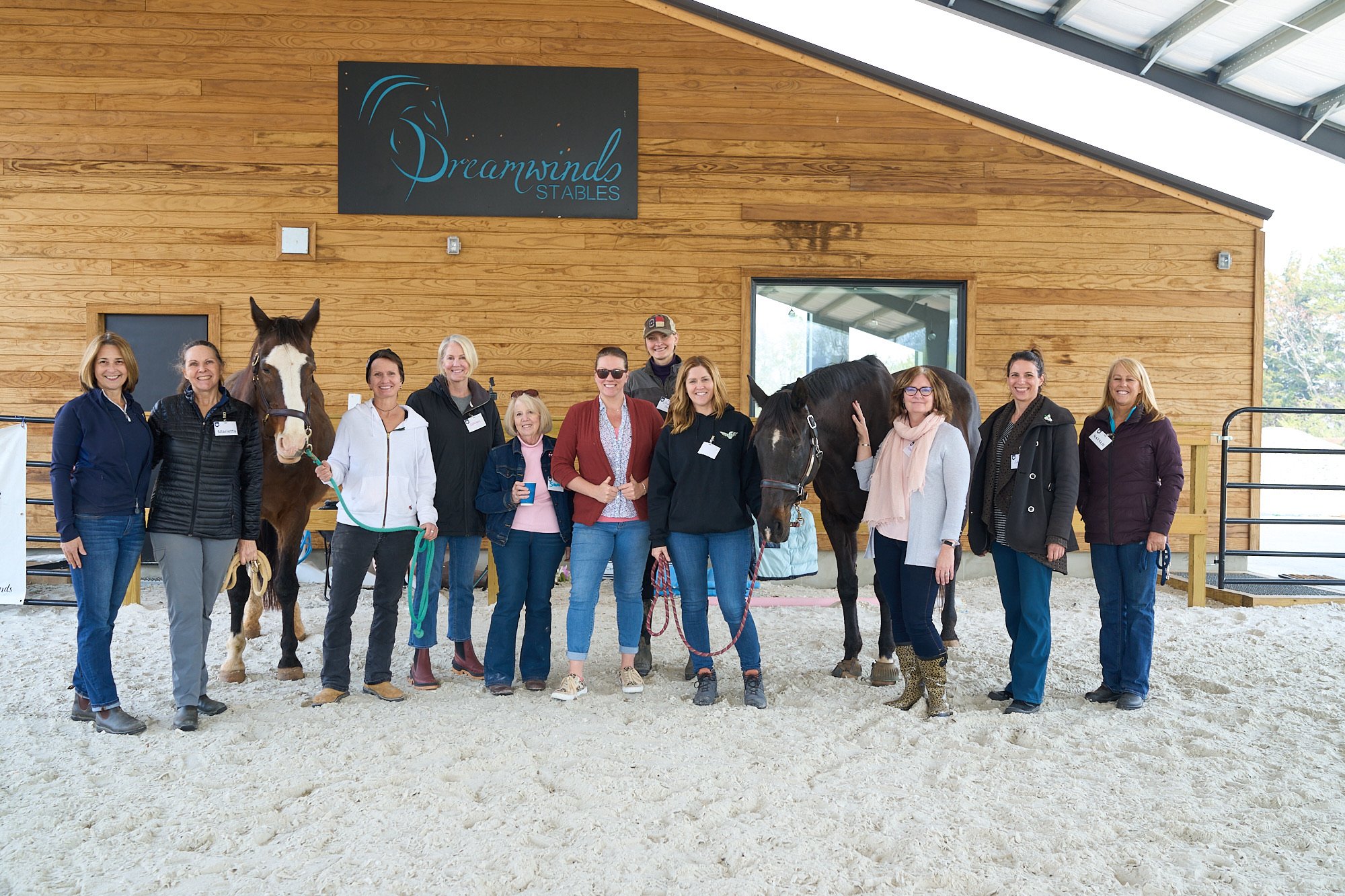
Vision boards have long been used as a powerful tool for personal growth. By translating thoughts, hopes, and intentions into images and words, they help people clarify what matters most and create a tangible reminder of where they want to go. A vision board isn’t about wishful thinking, it’s about bringing awareness to direction.
But while vision boards help us see what we want, they don’t always show us how we’re getting in our own way. That’s where horses come in.
The Power of Vision Boards
At their core, vision boards support:
Clarity: making abstract goals visible
Focus: identifying what truly resonates, not what we think should
Motivation: reconnecting with purpose during moments of doubt
When people slow down, reflect, and intentionally choose images that represent their goals, values, and desires, they begin aligning their inner world with future action. The process itself encourages mindfulness and intentionality which are key ingredients for meaningful growth.
Where Vision Boards Can Fall Short
Vision boards are powerful, but they often stay in the cognitive realm. We can create something beautiful, inspiring, and thoughtful, yet still remain unaware of habits, beliefs, or patterns that quietly block progress.
We may say we want confidence, connection, or growth while unconsciously holding tension, hesitation, or fear around stepping forward. These blind spots aren’t flaws. They’re simply human. And they’re not always visible through reflection alone.
Why Horses Make the Experience Transformational
Horses bring vision boards out of the head and into the body.
As highly perceptive, relational animals, horses respond to what’s present, not what’s planned. They notice energy, intention, clarity, and incongruence without judgment. When people interact with horses during a vision‑focused experience, they often gain insight into how aligned they truly are with the vision they’ve created.
A horse might respond easily when someone feels grounded and clear, or hesitate when someone is uncertain or holding back. In those moments, participants aren’t being “taught” a lesson; they’re discovering one. The horse simply reflects what’s already there.
This feedback helps people: Recognize blind spots between intention and action, notice patterns of hesitation, control, or avoidance, and experiment with new ways of showing up that feel more aligned.
Bringing Vision to Life
When vision boarding is paired with equine‑assisted learning, insight turns into embodiment. Participants don’t just see their vision, they feel what it’s like to move toward it. Through facilitated reflection, they can ask:
What did I notice about myself when I stepped toward my vision?
What shifted when I changed my approach?
How does this mirror how I pursue goals in my everyday life?
These moments create awareness that extends far beyond the arena. People leave not only inspired, but equipped with a clearer understanding of what supports them, what holds them back, and what small, intentional steps can bring their vision into reality.
A More Impactful Way Forward
Vision boards help us name what we want. Horses help us understand how we relate to getting there. Together, they create an experience that is reflective, honest, and deeply empowering.
When insight is paired with embodied experience, vision stops being something we look at, and becomes something we’re ready to live.
_____________________
Dreamwinds offers a thoughtfully guided one-day Vision Board experience designed to help you pause, reflect, and intentionally shape what you want more of in the year ahead. This immersive day blends meaningful conversation, creative visioning, and unique equine-guided experiences that bring clarity, confidence, and momentum to your goals. You will leave with a powerful visual anchor for your intentions, a deeper connection to yourself, and a renewed sense of possibility grounded in action, not wishful thinking. To learn more, visit www.dreamwinds.com/vision-board-retreat
….a leader whose every word inspires confidence, whose actions align perfectly with their promises, and whose presence alone motivates teams to push boundaries. What separates that leader from someone whose guidance falls flat, leaving teams disengaged and skeptical? The answer lies in credibility. This quality turns intentions into lasting impact.
In the book The Catalyst Effect by Jerry Toomer, PhD, Craig Caldwell, PhD, and colleagues, this forms the heart of Cornerstone 1: Building Credibility. Drawing from extensive field research, the book outlines how credibility isn’t just a nice-to-have trait but a strategic advantage that propels teams forward.
Why Credibility Matters: The Starting Point for Exceptional Leadership
Leadership thrives or falters on trust, and trust hinges on credibility. Without it, even the most brilliant strategies crumble, teams fragment, and innovation stalls. The Catalyst Effect frames credibility as the currency of leadership, emphasizing behaviors that foster trust, authenticity, and consistency. It isn’t about charisma or title. It focuses on showing up reliably, day after day, in ways that make others say, “I believe in you.”
Additional research backs this up.
Kouzes and Posner, in Credibility: How Leaders Gain and Lose It, Why People Demand It, highlight that credibility helps explain why people choose to follow someone.
Stephen M.R. Covey’s The Speed of Trust reveals that high-credibility leaders see higher productivity and engagement from their teams.
Paul Zak’s “The Neuroscience of Trust” in Harvard Business Review shows high-trust teams report higher productivity and lower burnout. These findings underscore The Catalyst Effect‘s call for intentional behaviors that inspire belief.
Building Credibility through integrity, clear communication, and optimism is the foundation that enables all other leadership competencies.
Neglect it, and you risk becoming just another voice in the noise. Invest in it, and you unlock teams capable of extraordinary results.
Think this only applies to those with formal leadership roles – think again.
Building credibility is for everyone – at all levels in an organization
The Catalyst Effect: Cornerstone 1 Building Credibility
Credibility is dissected through three interconnected competencies (behaviors) that form this cornerstone:
Competency 1: Acts with Integrity and Inspires Trust: Trust emerges when others perceive you as reliable and worthy of vulnerability. Ethical actions and relational bonds create environments where trust flows naturally, encouraging teams to take risks and collaborate openly.
Competency 2: Communicates Clearly: Articulates vision and feedback with precision, ensuring everyone understands goals and roles. This clarity eliminates confusion and fosters alignment. Authenticity means aligning your actions with your words, showing up as your true self rather than a polished facade.
Competency 3: Invigorates with Optimism: Radiates hope and energy, turning challenges into opportunities. Credible leaders don’t just manage. They inspire, energizing teams to embrace change with confidence.
These behaviors are practical tools drawn from real-world observations.
Without credibility, your ideas, even the most visionary, fall on deaf ears.
Over the next three weeks, we will take a deep dive into each of these competencies. Each post will include:
Recommended books, resources, webinars, and, in some cases, free tools to support your growth.
How Equine-Assisted Learning (EAL) offers a unique, transformative experience with a high return on the experience (see below).
Explore how different DISC style blends build trust, communicate possibilities differently, and how that impacts your ability to build credibility. We are this topic at our Making Sense of Your People Puzzle webinar on January 29th
A Unique Path to Building Credibility: Equine-Assisted Learning
Some of the most powerful lessons in leadership credibility happen outdoors, working with horses. Equine-assisted learning (EAL) programs create a unique environment where credibility must be earned in real time. Horses demand congruence between your intention and your action. They respond to who you are, not what you say. They reflect your authenticity instantly.
Research on equine-assisted experiential learning shows that these programs can develop skills critical to credible leadership. According to studies documented in the International Journal of Organizational Leadership and Pathways: The Ontario Journal of Outdoor Education, participants in equine-assisted programs demonstrate improvements in:
Trust-Building Through Non-Verbal Communication Horses read body language, energy, and emotional state. This forces leaders to become aware of the messages they’re sending beyond their words—a critical skill for building credibility with people.
Enhanced Emotional Intelligence and Self-Awareness Working with horses reveals patterns in how we show up under pressure. Do we lead with confidence or force? Do we listen or push? The immediate feedback helps leaders develop self-awareness that transfers directly to human interactions.
Real-Time Feedback on Authenticity As documented in research by Lyle and Schlamb (2017), horses provide honest, in-the-moment feedback about how we are showing up. You cannot fake confidence or control with a horse. They sense incongruence immediately. This creates a safe space to practice authentic leadership where your internal state matches your external presence.
Why Now? Credibility in a Distrustful World
In an era of eroding trust, credibility is your competitive edge. The Catalyst Effect shows credible leaders see greater innovation and retention.
Today, only 30% of employees trust their leaders.
The good news is that you can build your credibility starting today!
Next Steps: Your Path to Credibility
This week: 5 Actions to Start Building Credibility Today
Keep one promise you’ve been delaying.
Ask for feedback on your consistency.
Choose truth over convenience.
Practice radical transparency in one area.
Share your commitment with your team—vulnerability builds trust.
This Month: Track small wins and moments where you demonstrate credibility. Notice patterns. Adjust your approach based on what you learn.
This Quarter: Complete a DISC Leadership Assessment or conduct the Action360 Powered by The Catalyst Effect assessment. Invest in an equine-assisted learning event for you and your team, which includes 3 months of coaching. Reply to this email to get more information or schedule a call with me using this link: Book with Marietta
Reflection Cards from Holstee help build credibility by encouraging deeper dialogue and empathy, strengtheningpersonal and professional relationships. I like them because they offer less intensive and more intensive options to meet you where you are on any given day. Our family started using these late last year, and we LOVE THEM!
Effective meeting management is one of the fastest ways leaders build credibility. When you run meetings with clarity, purpose, and respect for people’s time, you signal competence, reliability, and professionalism. Over time, this consistency strengthens trust and reinforces your leadership presence.
Giving and receiving feedback is a powerful credibility builder for leaders. When you offer feedback with clarity, respect, and a genuine desire to help others grow—and remain open to feedback yourself—you demonstrate humility, confidence, and accountability. Over time, this creates a culture of trust where people know your words and actions align.
Call to Action
Leadership without credibility is just noise. Leadership grounded in trust, integrity, and authenticity changes everything.
Your credibility matters.
Every small action compounds.
Let’s build that foundation together.
Dreamwinds is proud to partner with Evolu Coaching on transformative EAL leadership and team programs with Marietta as our Coach in Residence.
You've probably heard whispers about Equine Assisted Learning (EAL) in leadership circles. Maybe you're curious but hesitant. Or perhaps you've dismissed it based on assumptions that aren't quite right. Let's set the record straight on what EAL really is and what it can do for your personal and professional growth.
Misconception #1: "You Need to Be a Horse Person"
The Reality: You don't need to own a horse, know how to ride, or even particularly love horses to benefit from EAL.
This might be the biggest barrier preventing people from exploring equine assisted learning. Many assume that because horses are involved, you need years of equestrian experience or a deep passion for these animals. That's simply not true.
In fact, some of the most powerful breakthroughs happen with people who are initially nervous around horses. That nervousness often reflects the same hesitation you might feel when stepping into leadership roles or facing challenging conversations at work. Learning to approach a 1,200-pound horse with confidence translates directly into approaching difficult situations in your professional life.
Your relationship with the horse develops organically during the program. You'll learn everything you need to know about interacting safely and effectively with these incredible animals. More importantly, you'll discover that horses respond to your authentic self, not your riding skills or horse knowledge.
What matters is your willingness to be present, aware, and open to learning. The horses will teach you the rest.
Misconception #2: "It's Just Therapy in Disguise"
The Reality: EAL is education and leadership development, not therapy.
This confusion is understandable because horses are used in therapeutic settings. However, Equine Assisted Learning focuses specifically on skill development, leadership capabilities, and personal growth rather than addressing mental health issues.
Think of EAL as an experiential classroom where horses serve as your teachers and mirrors for your behavior. You're learning practical skills like:
Reading non-verbal communication
Developing authentic leadership presence
Building trust and rapport quickly
Managing your energy and emotions under pressure
Improving your ability to influence others without force
The learning happens through structured activities designed to highlight specific leadership concepts. You might work with a horse to practice setting boundaries, or collaborate with your team to guide horses through an obstacle course, revealing natural communication and leadership patterns.
This isn't about processing past trauma or working through deep emotional issues. It's about expanding your leadership toolkit with skills that transfer immediately to your workplace and personal relationships.
Misconception #3: "There's No Real Science Behind It"
The Reality: EAL is grounded in solid research and produces measurable results.
Skeptics often dismiss equine assisted learning as "fluffy" or unscientific. The truth is, there's substantial research backing the effectiveness of human-horse interactions for learning and development.
Studies have shown that interacting with horses:
Reduces cortisol (stress hormone) levels
Increases oxytocin production (bonding hormone)
Improves emotional regulation
Enhances leadership self-efficacy
Develops better communication skills
The measurable outcomes from EAL programs include improved 360-degree feedback scores, increased emotional intelligence assessments, better team collaboration metrics, and enhanced leadership effectiveness ratings.
Horses provide immediate, honest feedback about your energy, intention, and leadership approach. Unlike humans, they don't have hidden agendas or political motivations. They simply respond to what you're projecting in the moment. This creates an incredibly rich learning environment where you receive instant feedback on your leadership effectiveness.
Organizations investing in EAL programs track concrete improvements in employee engagement, communication effectiveness, and leadership confidence. The results are both felt emotionally and measured objectively.
Misconception #4: "It Only Works for Certain Types of People"
The Reality: EAL is effective across all personality types, ages, and professional levels.
You might think extroverts would naturally excel in EAL while introverts would struggle, or that it's better suited for younger, more adventurous professionals. Experience shows the opposite.
Introverts often discover their quiet leadership strength works beautifully with horses. These animals appreciate calm, thoughtful energy and respond well to subtle communication. Many introverted leaders find their confidence soars when they realize they don't need to be loud or forceful to be effective.
Extroverts, meanwhile, learn valuable lessons about the power of stillness and listening. Horses teach them when to dial back their energy and when authentic presence is more powerful than charisma.
Age is irrelevant when it comes to learning from horses. Whether you're a recent graduate stepping into your first leadership role or a seasoned executive looking to refine your approach, horses meet you exactly where you are. They don't care about your title, experience level, or industry background.
The beauty of EAL is its universal applicability. The core principles of leadership, communication, trust, and authenticity transcend personality types and demographics. Horses help everyone discover their unique leadership strengths while addressing their specific development areas.
Misconception #5: "The Horses Do All the Work"
The Reality: You're an active participant in your own learning journey.
Perhaps the most misunderstood aspect of EAL is thinking that horses possess some magical ability to automatically transform you into a better leader. While horses are remarkable teachers, the learning requires your full engagement and commitment to growth.
Horses don't solve your leadership challenges for you. Instead, they create opportunities for you to practice new behaviors and receive immediate feedback. They highlight your current patterns and give you chances to try different approaches in a safe, supportive environment.
The real work happens when you:
Pay attention to how horses respond to different approaches you try
Reflect on what their responses reveal about your leadership style
Practice new behaviors based on what you're learning
Transfer insights from horse interactions to workplace situations
Commit to continued growth and development beyond the program
Skilled EAL facilitators guide this process, helping you notice patterns, make connections, and apply learning to your specific leadership challenges. The horses provide the feedback and learning opportunities, but you must do the work of integrating these insights into your leadership practice.
The transformation comes from your willingness to be vulnerable, try new approaches, receive feedback without defensiveness, and commit to ongoing growth. Horses simply create the perfect conditions for this learning to occur.
Ready to Experience EAL for Yourself?
These misconceptions keep many potentially great leaders from exploring one of the most powerful development experiences available. Don't let outdated assumptions prevent you from discovering what EAL can do for your leadership journey.
The best way to understand equine assisted learning is to experience it firsthand. At Dreamwinds, we've seen skeptics become advocates after just one session. We've watched quiet team members find their voice and seen experienced leaders discover entirely new dimensions of their capabilities.
Your leadership potential is waiting to be unlocked. The horses are ready to be your teachers. The question is: are you ready to learn?
Ready to bust these myths yourself and see what EAL can really do? Visit Dreamwinds to explore our programs and take the first step toward transforming your leadership approach. Let's build the leader you were meant to be, together.
Have you ever tried to fake confidence when you were actually nervous? Or put on a brave face when you felt uncertain inside? Humans might buy it, but horses? Not a chance.
There's an old saying that captures something profound about equine-assisted learning: "You can't lie to a horse." These magnificent animals possess an almost supernatural ability to see right through our masks, our pretenses, and our carefully constructed facades. They read our energy, sense our true intentions, and respond to who we really are: not who we're trying to appear to be.
This incredible honesty makes horses some of the most powerful teachers on the planet when it comes to developing authentic leadership, genuine communication, and real teamwork skills. Whether you're leading a corporate team, coaching athletes, or facilitating personal growth retreats, horses create a learning environment where transformation happens fast: because there's simply nowhere to hide.
Why Horses Are Natural Truth Detectors
As prey animals, horses have evolved over millions of years to be exquisitely sensitive to energy and intention. Their survival depends on reading the subtlest signals: a slight shift in posture, a change in breathing, the incongruence between what someone says and what they truly feel. This isn't magic; it's biology.
When you approach a horse, they're instantly assessing: "Is this person safe? Are they confident? Are they being genuine with me?" If your words say one thing but your body language says another, the horse will always trust the body language. They live in the moment, responding to what's real rather than what's being presented.
This creates an immediate feedback loop that's both honest and non-judgmental. A horse won't think less of you for being nervous: they'll simply respond to your nervousness. But when you find that authentic, grounded place within yourself, their response shifts instantly. It's like having a mirror that reflects your true leadership presence back to you in real time.
The Magic of Authentic Leadership Development
This is where the real transformation happens. In our human world, we've become experts at managing perceptions, crafting our image, and saying what we think others want to hear. But horses strip all that away. They force us to find our authentic voice, our genuine confidence, and our real leadership style.
Self-Awareness Breakthrough: When you're with a horse, you quickly become aware of your internal state. Are you tense? Distracted? Trying too hard? The horse's response gives you immediate insight into patterns you might not even realize you have. Corporate executives discover they've been leading from fear rather than confidence. Athletes recognize how their mental chatter affects their performance. Women in leadership roles find their authentic power.
Communication That Actually Works: Horses teach us that real communication isn't about volume or clever words: it's about clarity, consistency, and genuine intention. When you learn to communicate with a 1,200-pound animal using nothing but your presence and energy, you develop communication skills that translate powerfully to human relationships.
Corporate Teams: Building Trust That Can't Be Faked
In the corporate world, teams often struggle with trust, authentic communication, and genuine collaboration. Traditional team-building exercises can feel forced or superficial, but working with horses creates an environment where these skills develop naturally.
When corporate teams work with horses, something remarkable happens. The usual office dynamics fall away. Job titles become irrelevant. The only thing that matters is authentic presence and genuine leadership. Team members who might normally compete with each other find themselves naturally collaborating to achieve success with their equine partners.
The lessons are immediate and profound. Leaders discover whether their team truly trusts them. Team members learn to give and receive feedback honestly. Communication becomes clear and direct because horses demand nothing less. These aren't abstract concepts discussed in a conference room: they're lived experiences that transform how teams operate back at the office.
Sports Teams: Performance Through Authentic Connection
Athletes know that mental game is everything, but traditional sports psychology approaches often focus on individual performance rather than authentic team connection. Horses offer something different: they teach athletes how to find their centered, confident state and maintain it under pressure.
When a sports team works with horses, they learn to read each other's energy the way horses read theirs. They develop an intuitive understanding of team dynamics. Athletes discover how their individual mental state affects the entire team's performance, and they learn to support each other in finding that authentic, confident place where peak performance happens.
The horses don't care about your stats or your reputation: they respond to your present-moment authenticity. This teaches athletes to let go of past failures and future pressures, focusing instead on bringing their best, most genuine selves to each moment of competition.
Women's Retreats: Reclaiming Authentic Power
For many women, especially those in leadership roles, the pressure to be "enough": strong enough, confident enough, nurturing enough: can create a disconnection from their authentic power. Horses offer a unique space to explore what genuine strength and leadership really look like.
In women's retreats, horses become partners in rediscovering authentic feminine leadership. They respond beautifully to collaborative, intuitive leadership styles that many women naturally possess but have been taught to suppress in professional settings. Working with horses, women often discover they don't need to lead like men: they can lead like themselves.
The horses teach lessons about setting boundaries with compassion, leading with both strength and sensitivity, and trusting their intuition. These aren't just personal insights: they're leadership skills that transform how women show up in their professional and personal lives.
The Universal Benefits: What Every Group Discovers
Regardless of whether you're working with corporate executives, athletes, or women's groups, certain profound benefits emerge consistently when people work with horses:
Emotional Regulation: Horses are incredibly sensitive to emotional energy, and they teach us to manage our emotions rather than being managed by them. You can't fake calm with a horse: you have to find real centeredness.
Presence and Mindfulness: Horses live entirely in the present moment, and they draw us into that space with them. This develops the kind of mindful leadership that creates trust and inspires others.
Non-Verbal Communication Mastery: Research shows that over 90% of communication is non-verbal, yet we spend almost no time developing these skills. Horses make us experts in reading and projecting authentic energy.
Adaptive Leadership: Every horse is different, just like every team member or situation you'll face as a leader. Horses teach us to read the individual and the moment, adapting our leadership style accordingly.
Courage and Confidence: There's something uniquely confidence-building about successfully leading a powerful animal through partnership rather than dominance. This translates into all areas of life and leadership.
Building Teams That Can't Be Broken
When groups work together with horses, they develop a level of trust and communication that's almost impossible to achieve through traditional methods. They learn to support each other's authentic selves rather than their professional personas. They develop the ability to give and receive honest feedback with compassion.
Most importantly, they discover that the strongest teams aren't built on perfection: they're built on authenticity, mutual support, and the courage to show up as they really are.
The horses don't care about your resume, your title, or your past achievements. They care about who you are right now, in this moment, and whether you can be trusted to lead with integrity. This creates a level of authentic team building that transforms not just how groups work together, but how individuals show up in all their relationships.
Ready to Experience the Truth?
The beautiful thing about equine-assisted learning is that you don't need any horse experience to benefit. The horses are the teachers: your job is simply to show up authentically and be willing to learn from their wisdom.
Whether you're looking to develop more authentic leadership in your organization, build stronger team dynamics, or explore your own leadership potential, horses offer a unique mirror that reflects back your truest, most effective self.
At Dreamwinds Equine Assisted Learning Centre, we've seen countless individuals and teams transform through these powerful partnerships. The lessons learned in the arena don't stay in the arena: they become integrated into every aspect of how you lead, communicate, and build relationships.
You can't lie to a horse, and that's exactly why working with them creates such profound, lasting change. They see your potential before you do, and they won't let you settle for anything less than your authentic best.
Ready to discover what horses can teach you about authentic leadership? Your most genuine, effective self is waiting to be discovered. Let's explore what's possible together.
Benjamin Franklin once said, “Tell me and I forget, teach me and I may remember, involve me and I learn.” I didn’t know that quote as a kid, but I lived it.
I always did very well in school. Learning came easily to me. What most people never realized is that I hated it. Not the learning itself, but the endless sitting still, the constant listening. I was the student who flew through assignments quickly, then got restless. I’d start wandering, talking, distracting others. Cue the reprimands, detentions, and being moved right up beside the teacher’s desk.
I needed to be doing.
By the time I hit high school, I was constantly searching for “legal” ways to get out of class. And when I went to university? I rarely went to lectures. Instead, I bought the textbooks, completed the assignments, and found my own way to learn—highlighting, rewriting notes, and breaking things down until it stuck. Looking back, I realize what I was doing was creating my own version of experiential learning. Listening alone was never going to work for me.
And according to research, I’m not alone.
Why Experiential Learning Beats Traditional Training
Studies show that after just three hours, people retain only about 10–20% of what they hear in a lecture. But when learning is active, visual, and hands-on, retention can climb to 65–80%. Even more compelling, a major meta-analysis in STEM education found that active learning reduces failure rates by nearly half compared to traditional lecture-based teaching.
The takeaway? Knowledge gained by listening alone fades quickly, but learning through experience transforms understanding into memory and memory into lasting change.
In other words, sitting through a two-hour lecture might feel productive, but within days most of that information is gone. Hands-on learning, on the other hand, sticks—because it’s connected to doing, not just hearing.
Why Hands-On Learning Works So Well with Horses
This is why I love Equine-Assisted Learning (EAL) so deeply. With horses, you can’t just sit back passively and take notes. You have to step into the arena, adjust, respond, and reflect. Horses give instant, honest feedback. If your energy is unclear, they won’t follow. If your communication is inconsistent, they’ll hesitate.
Every lesson is a lived experience. And that’s exactly why EAL far outperforms traditional leadership training. People don’t just gain knowledge, they create memories. Relatable, real-life moments that stick with them long after the session ends. These memories become anchors they can draw on in the workplace, with their teams, and even at home. It’s not theory, it’s transformation.
Why Hands-On Certification Matters for EAL
This same principle applies when you’re training to become a facilitator. Reading a manual or watching videos might give you an overview, but it won’t prepare you to confidently guide clients through powerful, horse-led experiences.
I get asked frequently if our EAL Certification can be completed online only. And the answer is always no. An effective EAL Certification Program must include hands-on training with horses, structured facilitation practice, and real-time coaching. That’s how you build the skills, presence, and confidence needed to create meaningful impact. It’s also how we make sure every graduate meets the highest standard of facilitation we stand for. Because if experiential learning is what makes EAL powerful for participants, it has to be the foundation for facilitators too.
From Information to Transformation
Traditional classroom training has its place, but when it comes to leadership development, personal growth, and authentic change, experiential learning leaves lectures in the dust.
That’s why EAL works. And it’s why I love this work. At Dreamwinds, we don’t just teach concepts, we live them. Because transformation only lasts when it’s experienced, not just explained.
And that’s the kind of learning that truly changes lives.
At the end of the day, the research only confirms what I’ve felt my whole life, that we learn best by doing. That’s what makes Equine-Assisted Learning so powerful, and why hands-on training is at the heart of everything we do at Dreamwinds. Horses don’t just teach concepts, they create unforgettable moments that stay with us and shape how we lead, live, and connect. And to me, that’s the kind of learning worth investing in. If you’re someone who’s always learned best by doing, just like me, you’ll understand why experiential learning, and especially learning with horses, can be so life-changing.
About Dreamwinds
At Dreamwinds, we blend proven leadership principles with the wisdom of horses to help people grow—whether that’s teams striving for stronger collaboration or individuals seeking personal breakthroughs. From reintegrating remote teams and developing high-performing leaders to guiding women’s retreats, family sessions, and confidence-building programs, our Equine-Assisted Learning experiences create lessons that stick, long after the session ends.
After years of remote and hybrid work, many organizations are calling employees back into the office—at least part-time. While this shift may seem like a return to normal, the reality for many teams is anything but. Remote work changed how we communicate, collaborate, and connect. Now, reintegrating into in-person work requires more than a desk and a schedule—it requires rebuilding team dynamics, trust, and shared purpose.
That’s where Equine-Assisted Learning (EAL) team events come in.
The Hidden Challenges of Returning to the Office
The transition from remote work to in-person collaboration can stir up a range of challenges:
Team members who have never met in person may struggle to connect
Communication habits formed online may not translate well face-to-face
Social anxiety and isolation can make reintegration overwhelming
Trust and cohesion may be lacking, especially in teams with turnover
Traditional team-building approaches often fall flat in addressing these deeper dynamics. They entertain, but they don’t transform. EAL is different.
What Is Equine-Assisted Learning (EAL)?
EAL is a powerful, hands-on approach to personal and professional development where participants work in partnership with horses through fun, challenging, and goal-oriented activities. There’s no riding—just meaningful interaction grounded in teamwork, communication, and leadership.
In Dreamwinds EAL programs, horses serve as active partners—not just mirrors—responding to the energy, behavior, and intentions of the team. What makes this feedback so impactful is that the qualities horses look for in a leader—clarity, trustworthiness, consistency, and calm confidence—are the very same traits people value in colleagues, teammates, and leaders. As participants adapt and improve, the horses respond in real time, offering honest, non-judgmental feedback that’s not only clear but deeply relevant to how we show up and work with others.
Why EAL Works for Rebuilding Team Connection
Here’s how EAL events can help teams make a smoother, more effective transition back into the office:
1. Break Down Silos and Build Trust
In a remote world, it’s easy to work in isolation. EAL exercises require authentic teamwork—and horses won’t respond to disconnection. Teams must listen, collaborate, and align to achieve a shared goal, often for the first time in months (or years) in a physical space.
2. Enhance Nonverbal Communication
Zoom fatigue trained us to rely heavily on words while tuning out body language. In an EAL session, nonverbal cues are everything. Horses respond to energy, intention, and clarity—teaching participants to become more self-aware and attuned to how they communicate beyond the screen.
3. Create a Shared, Meaningful Experience
Coming back into the office can feel transactional. EAL provides a memorable, emotionally resonant experience that re-establishes human connection in a meaningful way. It reminds teams what it feels like to be united, seen, and valued.
4. Uncover Hidden Strengths and Dynamics
EAL exercises reveal how team members lead, follow, support, and respond under pressure. These insights open the door to rich conversations about roles, expectations, and opportunities for more effective collaboration.
5. Reignite Engagement and Belonging
Reintegration isn’t just about logistics—it’s about identity and purpose. EAL helps individuals reconnect with their colleagues and themselves. It gives them a chance to step outside the daily grind, reflect, and recommit to shared goals.
Bring Your Team Back Stronger
Bringing employees back to the office is more than a policy change—it’s a cultural shift. And if we want teams to thrive in this new chapter, we need to give them the tools to reconnect in real, authentic ways.
Equine-Assisted Learning is not just team-building—it’s team transformation.
At Dreamwinds, we help corporate teams navigate change, strengthen communication, and build trust through unforgettable EAL experiences. Whether you’re rebuilding after remote work, launching a new project, or simply want to invest in your people, we’re here to help.
👉 Ready to bring your team back stronger? Let’s talk.
About Dreamwinds
Dreamwinds Equine Assisted Learning Centre is a premier provider of experiential leadership and team development programs based in Tryon, North Carolina. Founded by former corporate executive Tracey Evans, Dreamwinds blends proven leadership principles with the power of horses to help individuals and teams grow through engaging, hands-on experiences. Whether you’re reintegrating remote teams, building stronger leaders, or seeking transformative team-building, our customized Equine-Assisted Learning programs deliver lasting impact.
Dreamwinds also offers world-class EAL Facilitator Certification for those looking to turn their passion for horses and helping others into a fulfilling career.
Forget talent alone—teams that win today build trust, fast. Here’s how horses are helping athletes connect, lead, and perform like never before.
The Hidden Edge Behind Every Great Team
What separates good teams from great ones isn’t always talent. It’s trust. Unity. Chemistry. The kind that makes players fight for each other—especially when the game’s on the line.
But in today’s college sports landscape, building that kind of connection is harder than ever.
With constant roster turnover driven by the transfer portal, early pro declarations, and NIL-fueled recruitment shifts, team dynamics are in flux year-round. Coaches are tasked with developing cohesion in weeks, not seasons. Leaders are managing more change—and more pressure—than ever before.
So how do you create a culture of trust when your team is barely past introductions?
Surprisingly, one of the most powerful answers doesn’t come from a locker room or playbook—but from a horse.
What Is Equine-Assisted Learning (EAL)?
Equine-Assisted Learning (EAL) is a ground-based, experiential approach to team building where athletes engage with horses to explore leadership, communication, and collaboration.
It’s not about riding. It’s not a gimmick. It’s about putting players in real-time, high-feedback situations where they must show up authentically—and work as a team.
Horses respond only to what’s real. They mirror energy, presence, and intent. They don’t recognize titles or talent, only truth. That makes them the ultimate test of how a team actually functions beneath the surface.
Why Horses Work for Team Building
1. Horses Fast-Track Trust In EAL sessions, players drop their guard quickly. The horse becomes a common challenge, and the only way to succeed is through cooperation. In the process, teammates see each other’s strengths, vulnerabilities, and authentic selves—often for the first time.
2. Players Become Leaders—Without the Title Leadership in a horse exercise isn’t about volume or dominance. It’s about clarity, calm, and confidence. Athletes discover their influence—and often surprise themselves and their teammates with how they lead under pressure.
3. Teams Learn to Communicate Without the Ball Non-verbal cues matter in sports. They matter even more with horses. Players quickly see where communication breaks down—and where connection flows. These insights translate to better awareness, listening, and response during high-stakes moments in games.
4. Vulnerability Builds Respect EAL creates a safe space where athletes can struggle, adjust, and succeed together. Watching a teammate get frustrated, adapt, and grow in front of a horse—and the group—leaves a lasting impact. Respect deepens. Empathy grows. Real bonds form.
5. Resilience Is Built in Real Time Working with horses presents challenges that don’t always go as planned—just like in competition. Athletes must stay composed, regroup when things go wrong, and find new ways forward. It’s a live lesson in perseverance that helps players develop mental toughness, emotional control, and the confidence to keep going when pressure is high and outcomes are uncertain.
Today’s Challenges Require New Tools
The portal era isn’t just a passing trend—it’s a new reality. Teams are no longer static; they’re dynamic ecosystems that shift constantly. Athletic leaders are now tasked with building chemistry in weeks, not years.
Traditional team-building often falls short because it doesn’t access the emotional core of what makes a team work: shared experience, vulnerability, trust, and belief in one another.
That’s exactly what EAL delivers—often in just a few hours.
Connection Is the Competitive Edge
When fans watch a team with true chemistry, they can feel it. The hustle is sharper. The plays are smoother. The effort is contagious.
Championships aren’t won with raw talent alone. They’re won when players commit to each other—when they build trust that doesn’t crack under pressure.
In a world where college sports move faster than ever, trust is no longer a luxury. It’s a game-changer.
And sometimes, building that trust starts with something as unexpected—and unforgettable—as a horse.
About Dreamwinds At Dreamwinds Equine Assisted Learning Centre, we specialize in helping teams bridge the gap between potential and performance. Our sports team programs are designed to take groups from strangers to connected teammates in just a few hours—through powerful, facilitated sessions with horses. Whether you’re welcoming new transfers, rebuilding chemistry mid-season, or preparing for a championship run, Dreamwinds offers a proven method to strengthen trust, communication, and leadership that shows up on and off the field. Experience the impact of true connection—and watch your team rise to the challenge, together.
It’s one of the most dangerous phrases in personal development—and in leadership. Because the moment we decide we know it all, we stop listening. We stop learning. We stop growing.
And the truth is, we don’t know what we don’t know.
That’s why I love working with horses. They have an uncanny ability to reveal the gaps we can’t see. Not by telling us what we’re missing, but by showing us—clearly, honestly, and without judgment.
Horses don’t care about your title, your resume, or how many leadership trainings you’ve done. They respond only to who you are in the moment—how you show up, what you’re projecting, and whether your intentions and actions align. And in that space, the blind spots become visible. It’s humbling. It’s powerful. And it’s where real transformation begins.
The Illusion of “I Know”
In my corporate days, I was guilty of this myself. I prided myself on being a strong leader, well-spoken, results-driven. I had the credentials, the experience, and a bookshelf full of leadership books. I was pretty sure I knew what good leadership looked like.
Then I started working with horses. And it didn’t take long before I realized just how much more there was to learn—not about skills or strategies, but about myself.
There’s no faking it with a horse. You can walk into the arena thinking you’re confident, in control, and clear… but if you’re carrying tension, self-doubt, or hidden agendas, they’ll feel it. They’ll resist. They’ll disengage. Or they’ll mirror that energy right back to you.
It’s not rejection—it’s feedback. Pure, honest feedback. And it invites us to pause and ask, “What am I not seeing about myself right now?”
A Client Who Thought They Knew It All
One of my favorite stories is from an executive who attended one of our corporate leadership programs. Let’s call him Steve.
Steve was a seasoned leader. Smart, successful, confident—bordering on skeptical. He made it very clear on day one that he had been through just about every leadership program out there and wasn’t sure what horses could possibly teach him.
But he was willing to play along.
During one of the exercises, Steve was partnered with a horse to complete a simple task—no riding, just leading. The instructions were clear, the goal was simple… and yet, the horse refused to move.
Steve tried reasoning. Then commanding. Then coaxing. Nothing worked. The horse stood still, unimpressed.
We asked Steve to pause and reflect. “What’s going on for you right now?” He admitted he was frustrated. “I know how to lead,” he said. “I’m giving the right cues. I’m clear on the goal.”
And then we asked the question that opened the door to growth: “But how are you showing up?”
Steve realized that while his words were confident, his energy was tense. He was carrying frustration and impatience—and the horse felt it. As soon as he softened, let go of the need to control the outcome, and truly connected—the horse moved with him.
After the session, Steve shared something powerful:
“I thought I knew what I needed to know about leadership, but I learned even more from the horses. How I show up, how I impact others, and the power of truly listening. That’s the kind of feedback I don’t get in the boardroom.”
That moment opened up a whole new level of awareness for him. And he wasn’t alone.
Horses Reveal the Gap Between Intent and Impact
One of the biggest blind spots we all face—especially as leaders—is the difference between what we intend to do and how it’s actually received. We may think we’re being clear, calm, or collaborative, but others may feel confused, pressured, or dismissed.
Horses don’t analyze your words—they respond to your energy, your body language, your presence. And that means they give you real-time insight into how you’re landing with others.
They don’t hold grudges or play politics. They just give you a clean slate in every moment to try again—with greater alignment and authenticity.
Letting Go of “Knowing” to Embrace Growth
The most successful leaders, facilitators, and changemakers I know have one thing in common: they remain open. They replace “I know” with “What else can I learn?” They stay curious, humble, and willing to receive feedback—even when it’s uncomfortable.
And that’s what horses teach best.
They don’t care what you know on paper. They care about who you are—right now, in this moment. And if you’re willing to listen, they’ll show you how to lead with clarity, empathy, and presence.
So if you find yourself thinking, “I’ve already done so much leadership training” or “I already know how to communicate”—I challenge you to pause and ask:
What might a horse reveal that I haven’t seen yet?
Because that’s where your next level of growth begins.
Spring is a season of renewal—a time when we clear out the clutter, open the windows, and let in fresh air and new energy. But spring cleaning isn’t just for our homes. It’s also an opportunity to take a closer look at what we’re holding onto in our hearts and minds. What beliefs, fears, or habits are weighing you down? What’s standing in the way of the life you truly want to create?
At Dreamwinds, we believe that transformation happens when we let go of what no longer serves us. Through Equine-Assisted Learning (EAL), we help individuals recognize and release the limiting patterns that keep them stuck. Horses, as intuitive and honest partners, provide powerful lessons in self-awareness and change, guiding us toward the freedom to step forward with confidence.
Clearing Out the Mental Clutter
Just as we declutter our closets, it’s essential to sort through our thoughts and beliefs. Often, we carry old stories about who we are and what we’re capable of—stories that no longer serve our growth. Horses reflect our internal state without judgment, reacting to the energy we bring into the arena. If we approach them with doubt, fear, or hesitation, they respond accordingly. But when we step forward with clarity and confidence, they meet us with trust and connection.
This real-time feedback allows us to become aware of the subconscious beliefs that shape our behaviors. Are you holding onto self-doubt? Are you playing small because of a fear of failure? By recognizing these patterns, we can begin to rewrite our internal narrative and create space for new possibilities.
Letting Go of Fear and Resistance
Change is uncomfortable, and our minds often resist it. Just like we hesitate to part with an old sweater we never wear, we may cling to familiar thoughts and habits—even when they no longer serve us. Horses teach us the power of releasing resistance. When we try to control the experience or hold onto old fears, they disengage. But when we surrender to the moment and trust the process, they step in and respond with connection and partnership.
Through EAL, participants experience this shift firsthand. A person who hesitates, holding back out of fear, may find that the horse remains distant. But the moment they release that fear and step forward with intention, the horse moves with them. This profound experience teaches us that letting go isn’t about losing control—it’s about making space for something better.
Embracing Renewal and Fresh Possibilities
Spring reminds us that new growth is always possible. Once we’ve cleared away what no longer serves us, we can plant new seeds—intentions, goals, and habits that align with the life we want to build. Horses model this beautifully. They don’t dwell on past mistakes or anxieties about the future. They live fully in the present, moving forward without hesitation.
As we embark on our own spring cleaning of the soul, we can take inspiration from the herd. What do you want to make room for in your life? More confidence? Stronger relationships? A new career path? Whatever it is, the key is to let go of the weight that holds you back so you can move forward freely.
Take the First Step
If you’re ready to clear out the mental clutter and embrace a new season of growth, Equine-Assisted Learning offers a transformative path forward. Through interactive exercises with horses, you’ll gain the awareness, confidence, and courage to step into the life you truly want.
This spring, give yourself the gift of renewal. Let go of what no longer serves you and step boldly into what’s next.
Join us at Dreamwinds for an experience that will help you declutter your soul and make space for new beginnings.
Are you ready to release and renew? Book your custom group event with us today!
Leadership is often associated with strength, strategy, and decisiveness. But what if the most effective leaders aren’t just the smartest or the most experienced, but the ones who lead from the heart?
Leading from the heart means bringing authenticity, empathy, and emotional intelligence into leadership. It’s about inspiring trust, building meaningful connections, and guiding others in a way that fosters collaboration and growth. Whether you’re leading a corporate team, coaching clients, or guiding a horse through an exercise, the way you show up—fully present and heart-centered—makes all the difference.
What Does It Mean to Lead from the Heart?
At its core, leading from the heart is about connection. It’s leading with authenticity, showing vulnerability, and creating an environment where others feel valued and empowered. It requires a balance of strength and compassion—setting clear expectations while also listening, understanding, and supporting those you lead.
Leaders who lead from the heart:
Prioritize trust and connection – They build relationships before they seek results.
Communicate with clarity and empathy – They listen actively and speak with intention.
Foster psychological safety – They create a space where people feel safe to take risks, share ideas, and be themselves.
Lead with integrity – They do what’s right, even when it’s difficult.
Empower others – They lift others up, creating a culture of collaboration and growth.
Lessons from Horses: Leadership with Heart
If you’ve ever worked with horses, you know they are incredible teachers of authentic leadership. They don’t respond to titles, authority, or force—they respond to energy, trust, and presence.
When we work with horses, we learn that true leadership isn’t about dominance—it’s about creating trust and connection. If we show up anxious, hesitant, or disconnected, the horse mirrors that energy. But when we lead with confidence, calmness, and clarity, the horse willingly follows.
This same principle applies to human leadership. People don’t follow leaders simply because they have authority—they follow because they trust them, feel seen by them, and believe in their vision.
The Power of Vulnerability in Leadership
A big misconception about leadership is that showing vulnerability is a sign of weakness. In reality, it’s one of the greatest strengths a leader can have. When a leader is open about challenges, asks for feedback, or admits mistakes, they create an atmosphere of honesty and trust.
Think about a leader who has inspired you. Chances are, they weren’t the ones who always seemed perfect, but the ones who shared their journey, showed humility, and led with authenticity.
Dr. Brené Brown, a leading researcher on vulnerability and leadership, says: "Vulnerability is the birthplace of innovation, creativity, and change."
When we allow ourselves to be real, we create a space where others feel safe to do the same. This fosters deeper relationships, stronger teams, and a culture of growth.
Balancing Strength and Compassion
Leading from the heart doesn’t mean being overly emotional or avoiding difficult decisions. It means leading with both strength and compassion—knowing when to push and when to support, when to set boundaries and when to offer grace.
A great leader can say: ✔️ “I see you. I hear you.” – Acknowledging people’s feelings and perspectives. ✔️ “I believe in you.” – Empowering others to rise to their potential. ✔️ “Here’s what we need to do.” – Providing clarity and direction.
By balancing these aspects, leaders create a culture of accountability and care, where people feel motivated to contribute their best.
Leading from the Heart in Everyday Life
You don’t have to be in a high-level leadership position to practice heart-centered leadership. Whether you’re a coach, a teacher, a parent, or a business owner, you lead every day—by the way you communicate, the way you show up, and the way you support others.
Here are some simple ways to lead from the heart in daily life:
Practice active listening. Pay full attention, put away distractions, and truly hear what others are saying.
Lead by example. Show integrity, resilience, and the behaviors you want to see in others.
Encourage and uplift others. Celebrate people’s strengths and contributions.
Stay present. Be mindful of your energy, your words, and your impact.
Be open to learning. Great leaders never stop growing and evolving.
The Legacy of Heart-Centered Leadership
When we lead from the heart, we don’t just create better teams—we create meaningful impact. People remember how we made them feel, the trust we built, and the way we showed up with authenticity and care.
The most powerful leaders aren’t the loudest or the most commanding—they’re the ones who inspire, empower, and uplift. They lead with heart, and in doing so, they leave a lasting legacy.
So ask yourself: How can I lead with more heart today?
💡 Let’s start a conversation! Have you experienced heart-centered leadership in action? Reply and share your thoughts—I’d love to hear from you! 😊